· 6 min read
We Built It. But Do We Know Where It Leads?
Founder of Cogletta

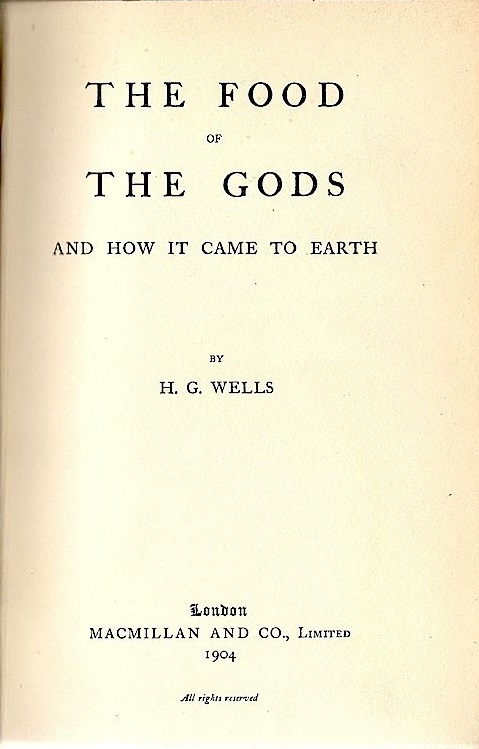
In Chapter IV of H. G. Wells's 1904 novel The Food of the Gods and How It Came to Earth, the chemist Mr Bensington hesitates over the unpredictable future effects of a discovery he has helped bring about. Turning to his colleague Cossar, he asks:
"After all, ought we to go on with it?"— H. G. Wells, The Food of the Gods, Book I, Chapter IV
What makes this question striking is the moment in which it is asked. The discovery has already been made. The substance works. The question is no longer what science can achieve, but whether they should continue.
When I read that line, artificial intelligence came to mind. It seems we are living through something like Bensington's moment of hesitation. For years, AI was a question about the limits of engineering and imagination. Could a machine recognise complex patterns, write coherent texts, or perform tasks we considered uniquely human? Today, we can sit in front of a screen and watch a model write code, bring together research from many papers, or respond to subtle differences in language. Much of this has become ordinary at a surprising speed.
We have built something extraordinary, and its development is moving fast. Yet Bensington's question stays with me. Being able to make something does not mean we understand where it will lead.
The Promise of a Discovery
The two scientists in Wells's story develop a substance called Herakleophorbia IV, which allows living things to grow far beyond their normal size. Bensington calls it the Food of the Gods. The discovery brings genuine excitement. What had seemed to be a biological limit has been overcome.
Even imagining the possible benefits of this Food is extraordinary. Chickens and crops could grow to enormous sizes, and farms could produce much more food. Far stronger human beings might reshape the world.
Yet the two scientists remain focused on the experiment itself: the growth curves, the substance they have developed, and the evidence that it works.
What Bensington and Redwood cannot know is what will happen when their discovery leaves the conditions in which it was tested and enters the ordinary world, where habits, mistakes, ambitions, and fears shape human behaviour. Their success in the laboratory tells them far less about that world than they had hoped.
Loading the rest of the essay…